

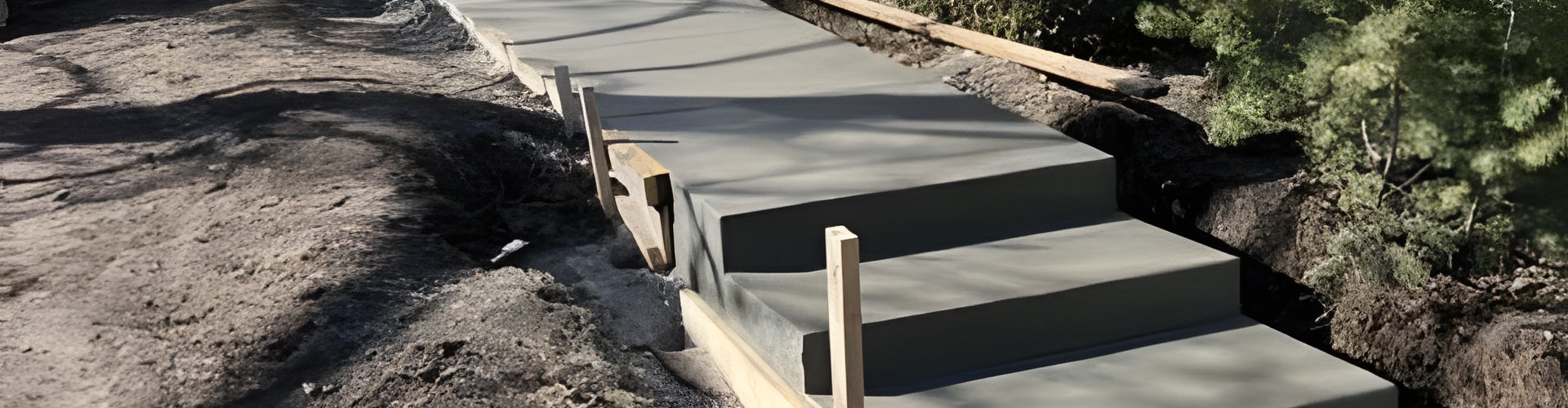
Why Concrete Walkways in Warrington Begin to Crack and Settle
Most property owners think concrete is bulletproof. Pour it, let it cure, and forget about it. But the ground beneath has other plans — and if you're not paying attention, those plans show up as cracks, dips, and unsafe surfaces. Warrington walkways don't fail because the material is weak. They fail because the foundation wasn't right, the water wasn't managed, or the prep work was rushed.
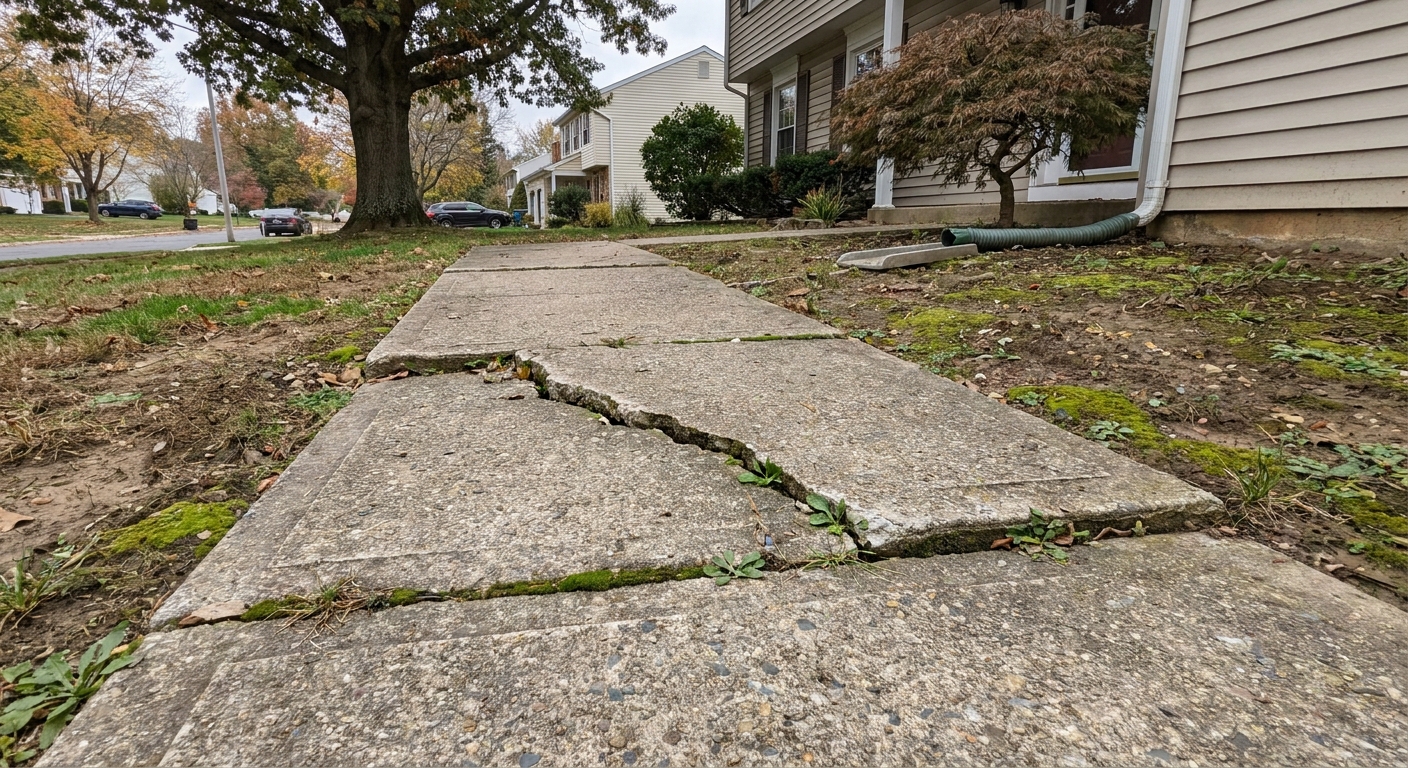
So here's what actually happens. Concrete doesn't just sit there. It responds to everything underneath it — soil movement, moisture swings, root pressure, freeze cycles. Every crack tells a story. And every settled slab started with something avoidable if you knew what to watch for.
The Soil Underneath Wasn't Ready
Nine times out of ten, settling starts below the surface. You pour concrete over dirt that wasn't compacted properly, and that dirt has nowhere to go but down. Warrington soil shifts with moisture — it expands when wet, contracts when dry. If the base wasn't tamped and graded before the pour, you're building on quicksand.
Voids form under the slab. The concrete loses support. Gravity does the rest. That's when you see one corner sink while the rest stays level. The walkway wasn't defective — the prep was.
Freeze Cycles Do the Damage You Don't See
Water gets into tiny cracks or porous spots in the concrete. Winter hits, and that water freezes. Ice expands with serious force — enough to fracture stone. Then it thaws, contracts, and the cycle repeats.
Each freeze-thaw round chips away at the integrity. If the walkway wasn't sealed or if drainage lets water pool nearby, the damage accelerates. This isn't a one-winter problem. It's cumulative, and by year three or four, the surface starts breaking apart in visible ways.
Tree Roots Push From Below
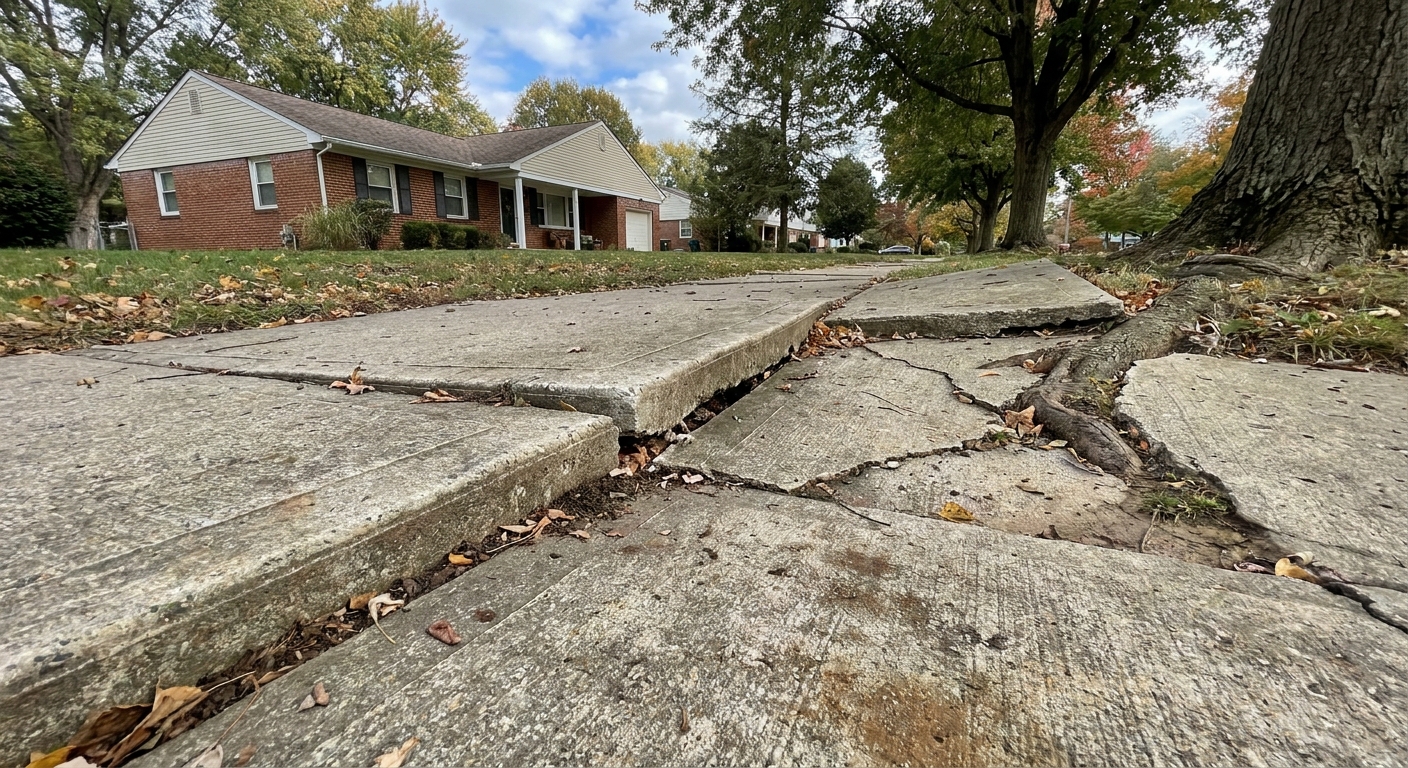
That oak tree adding curb appeal? Its roots are working overtime underneath your walkway. As they grow, they don't politely go around obstacles — they push through or lift them. Concrete slabs are no match for a root system seeking water and space.
Even smaller plants contribute. Weeds that sprout in the joints or cracks widen those gaps and let more moisture seep in. The combination of root pressure and water infiltration creates the perfect storm for cracking and upheaval.
Water Has Nowhere to Go
Poor drainage doesn't just create puddles — it erodes the soil that's supposed to hold your walkway in place. When water pools around or beneath the slab, it washes away the supporting base. Warrington gets heavy rain, and if the grading is off or there's no proper runoff system, that water sits and does damage.
Here's what proper drainage looks like:
- Sloping the walkway away from structures at a minimum grade
- Installing French drains or channel systems near high-risk areas
- Using permeable materials in adjacent landscaping to reduce runoff
- Clearing gutters and downspouts so water doesn't dump directly onto walkways
- Checking for low spots that collect standing water after storms
The Mix or Installation Was Subpar
Not all concrete is created equal. If the mix ratio is off — too much water, not enough cement, wrong aggregate size — the slab will be weaker from day one. If it's poured too thin or without rebar or wire mesh for reinforcement, it won't handle normal stress.
Curing matters too. Concrete that dries too fast or in extreme heat develops surface cracks before it even fully hardens. Experienced contractors know how to mix, pour, and cure properly. Cutting corners here guarantees problems down the road.
The Walkway Took Loads It Wasn't Built For
Concrete walkways are designed for foot traffic. They're not driveways. But sometimes a delivery truck rolls over them, or construction equipment parks on them during a project. That kind of weight can crack even well-installed slabs, especially if the base is already compromised.
Common sources of excessive load include:
- Vehicles crossing over walkways to access yards or garages
- Heavy machinery during landscaping or home renovation projects
- Stacked materials like firewood, pavers, or equipment stored long-term
- Snow removal equipment dragging across the surface with force
- Repeated impacts from dropped tools or delivered goods
Time Catches Up to Everything
Even the best-installed walkways age. Decades of foot traffic, sun exposure, rain, and minor ground shifts all take a toll. The surface wears down, small cracks appear, and the slab begins to settle incrementally. This is normal deterioration, not a sign of bad workmanship.
But age doesn't have to mean failure. Regular maintenance — sealing, filling minor cracks, addressing drainage issues as they pop up — extends the life significantly. Ignoring early warning signs is what turns a fixable crack into a full replacement job.
What You Can Do Before It Gets Worse
Preventing major damage starts with understanding what's happening beneath and around the concrete. Site prep is everything — compact the soil, grade for drainage, and use quality base material. Choose the right concrete mix and make sure it's poured at the correct thickness with proper reinforcement.
Once the walkway is in, stay ahead of small problems. Seal the surface every few years. Fill hairline cracks before they widen. Make sure water flows away from the slab, not toward it. Trim tree roots that are getting too close, and remove vegetation from joints.
When DIY Doesn't Cut It
Some cracks you can patch yourself. Some settling is cosmetic. But when the walkway has dropped several inches, when cracks are wide enough to trip someone, or when you see multiple slabs affected, it's time to bring in professionals. They'll assess whether the issue is surface-level or structural and recommend solutions that actually fix the root cause.
Options include:
- Mudjacking or slabjacking to lift settled sections back into place
- Polyurethane foam injection for a lighter, faster leveling method
- Crack routing and sealing to prevent water infiltration
- Full slab replacement if the damage is beyond repair
- Improved drainage installation to prevent recurrence
Why This Matters for Warrington Properties
A cracked or settled walkway isn't just an eyesore. It's a liability. Tripping hazards can lead to injuries and lawsuits. Uneven surfaces affect property value and curb appeal. And the longer you wait, the more expensive the fix becomes.
Warrington's climate and soil conditions make walkways especially vulnerable. But with the right approach — quality installation, proactive maintenance, and quick responses to early signs of trouble — your concrete services can hold up for decades. The key is treating it like infrastructure, not decoration. It carries weight, manages water, and responds to the ground beneath it.
Get Ahead of the Problem
Concrete walkways don't crack overnight. The damage builds slowly, starting with conditions you can control. Soil prep, drainage, material quality, and regular upkeep all play a role. Most failures are predictable and preventable if you know what to look for.
So walk your property. Check for pooling water, inspect for cracks, and note any areas where the surface has dipped. Catching issues early means smaller repairs and fewer headaches. And when the problem is bigger than a tube of sealant can handle, don't wait. Professional structural foundation repair specialists can assess foundation water damage and provide lasting solutions. Residential masonry services from experienced commercial masonry contractors ensure your walkways are built right from the start, and professional masonry experts know how to address both surface and structural concerns. The ground isn't going to fix itself, and neither is your walkway.
Let’s Restore Your Walkway’s Safety and Curb Appeal
We know how frustrating it is to see your concrete walkway crack or settle, especially when you want your property to look its best and stay safe for everyone. Let’s work together to address the root causes and restore your walkway before small issues become big headaches. Give us a call at 215-355-7549 or schedule an appointment—we’re ready to help you protect your investment and keep your walkways in top shape.
‹ Back
Recent Posts
-
Why Concrete Walkways in Warrington Begin to Crack and Settle
September 25, 2026
-

Keeping Your Stucco Looking Its Best in Doylestown
September 11, 2026
-
When Chimney Cracks in Newtown Need More Than a Quick Repair
August 28, 2026
-
Why Brick Pointing Matters for Older Homes in Doylestown
December 26, 2025
-
How to Tell If Your Stucco Needs Patching or Full Replacement
December 12, 2025