

Signs Your Stone Retaining Wall in Warwick Needs Some Attention
Most property owners look at their retaining walls and think everything's fine until something breaks. But stone doesn't fail overnight. It shifts, settles, and shows you what's coming—if you know what to watch for. Water pressure builds behind the wall. Frost wedges stones apart. Soil moves, and suddenly that wall you've counted on for years is leaning into your yard like it's tired of holding back the earth.
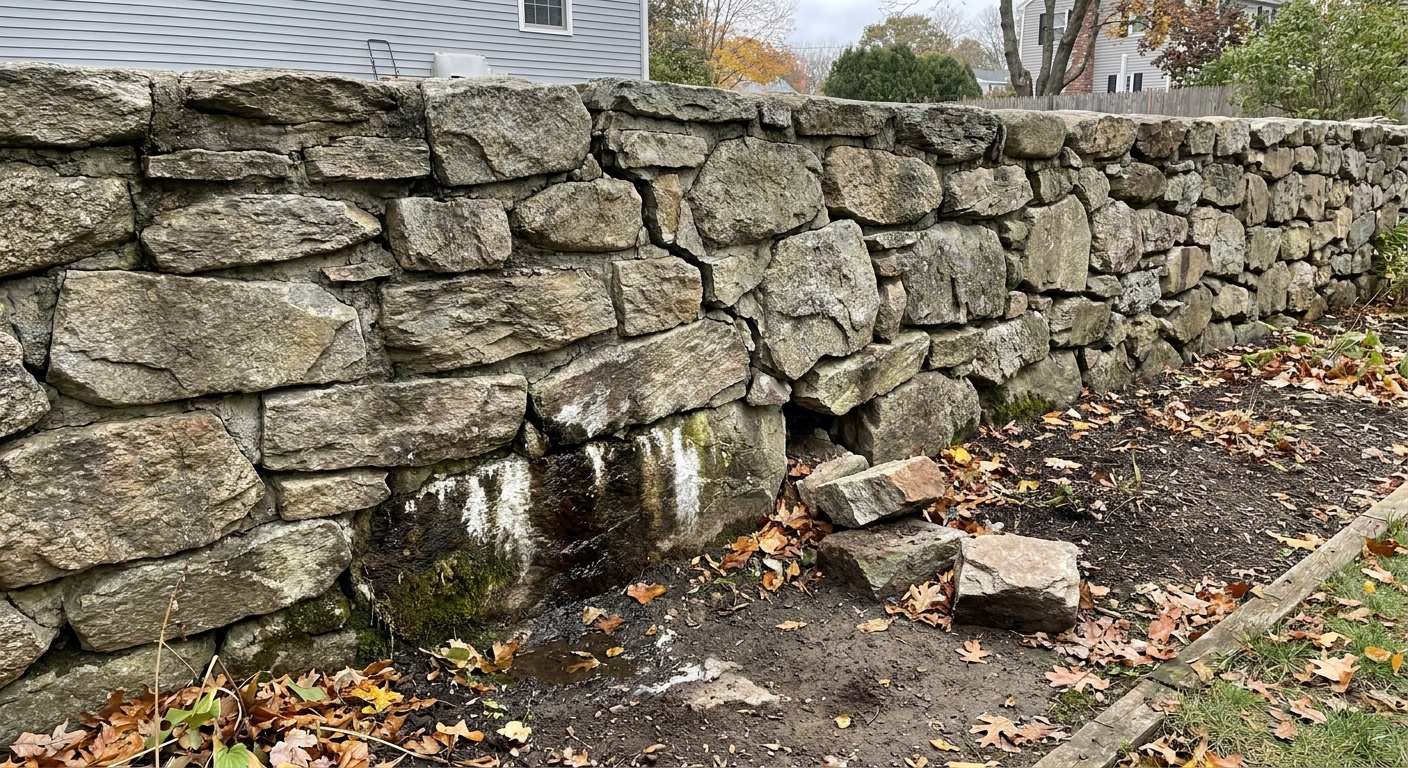
The walls worth saving are the ones that get attention before they fail. Every crack has a cause. Every bulge tells a story. And every repair avoided today becomes a full rebuild tomorrow. The difference between a quick fix and tearing everything down often comes down to whether you caught the warning signs early enough.
Stones That Shift or Bow Outward
A retaining wall should hold the line. When stones start pushing out or the face of the wall begins to curve, that's pressure talking—and it's not good news. This usually means water's building up behind the structure or the soil's moving more than the wall can handle. Sometimes it's drainage that was never installed right. Other times, it's just decades of freeze-thaw cycles doing what they do best.
Either way, a bowing wall won't fix itself. The longer it sits, the worse the pressure gets. We've seen walls that looked "a little off" one season completely collapse by the next. If the stones are moving, the wall's fighting a losing battle—and you need to step in before gravity wins.
Visible Cracks Running Through the Stone
Hairline fractures might seem minor, but they're entry points for water, ice, and root systems. Once moisture gets in, it expands when temperatures drop. That crack you could barely see in August becomes a split stone by February. Warwick winters don't mess around, and neither should you when it comes to managing what those freeze-thaw cycles can do to compromised stone.
Not every crack means disaster, but ignoring them guarantees one. Some fissures run shallow and cosmetic. Others cut deep and structural. The only way to know the difference is to get eyes on it—someone who understands how stone fails and what it takes to stop the spread.
The Wall Leans When It Should Stand Straight
A tilting wall is a wall that's losing the fight. This happens when the foundation shifts, when backfill wasn't compacted right, or when drainage fails and hydrostatic pressure takes over. Leaning walls don't straighten themselves out. They lean a little more each year until they fold.
We've pulled apart walls that were only a few degrees off—walls that looked "okay" from a distance but were already past the point of no return. The tilt you can see with your naked eye is often just the tip of what's happening underground. Foundation issues don't announce themselves with sirens. They show up as a slow, steady lean that most people notice too late.
Stones Coming Loose or Falling Out
When individual stones start popping out, the wall's integrity is already compromised. This can happen from root intrusion, poor mortar, or just the natural settling that happens when a wall wasn't built to last. Every missing stone weakens the structure around it. What starts as one becomes two, then five, then a section that needs complete replacement.
Loose stones are also a safety issue. They can fall on walkways, damage landscaping, or injure someone standing too close. If you're walking past your wall and kicking stones back into place every few weeks, that's not maintenance—that's a sign the whole thing needs professional stone and brickwork attention before someone gets hurt.
Water Collects Where It Shouldn't
Retaining walls are designed to manage water, not trap it. If you're seeing puddles at the base, damp patches on the face, or water seeping through the joints, your drainage system isn't doing its job. That water has nowhere to go except into the soil behind the wall, adding weight and pressure with every storm.
Poor drainage accelerates every other problem on this list. It destabilizes the foundation, promotes erosion, and speeds up freeze damage in colder months. Fixing drainage isn't glamorous work, but it's the difference between a wall that lasts another decade and one that collapses in the next heavy rain. Here's what proper drainage should handle:
- Channeling groundwater away from the wall's base
- Preventing hydrostatic pressure from building up behind the structure
- Allowing weep holes or gravel backfill to release trapped moisture
- Directing runoff to safe areas that won't undermine the foundation
- Managing seasonal changes in water table and precipitation
Soil Washing Away at the Base
Erosion doesn't just happen—it's a process, and by the time you notice it, it's been going on for a while. If the soil around your wall is disappearing after storms, that's a red flag. The wall's footer needs support, and when the ground beneath it starts washing away, the entire structure becomes unstable.
Warwick weather can be relentless. Heavy spring rains and winter thaw cycles pull soil downhill, especially on sloped properties. Once erosion starts, it feeds on itself—more soil disappears, more water flows through, and the cycle accelerates. Reinforcing the base and redirecting runoff can stop this before it undermines the wall entirely.
Vegetation Growing Where It Shouldn't
A little moss on old stone looks charming until you realize it's holding moisture against the surface. Weeds growing between stones might seem harmless, but their roots are prying things apart from the inside. Trees planted too close send roots under and through the wall, shifting stones and cracking mortar with slow, unstoppable force.
Plant growth isn't just cosmetic. It's structural. Removing invasive vegetation and keeping the wall clear isn't about aesthetics—it's about preventing root systems from doing long-term damage. If you've got saplings sprouting from your wall, those roots are already deeper than you think, and they're not going to stop on their own. Common problem plants include:
- Woody vines like ivy that anchor into mortar joints
- Moss and algae that trap moisture and promote freeze damage
- Tree seedlings with aggressive root systems
- Perennial weeds that spread through cracks and widen them over time
- Ground cover that blocks drainage pathways
White Residue or Discoloration Appearing on Stone
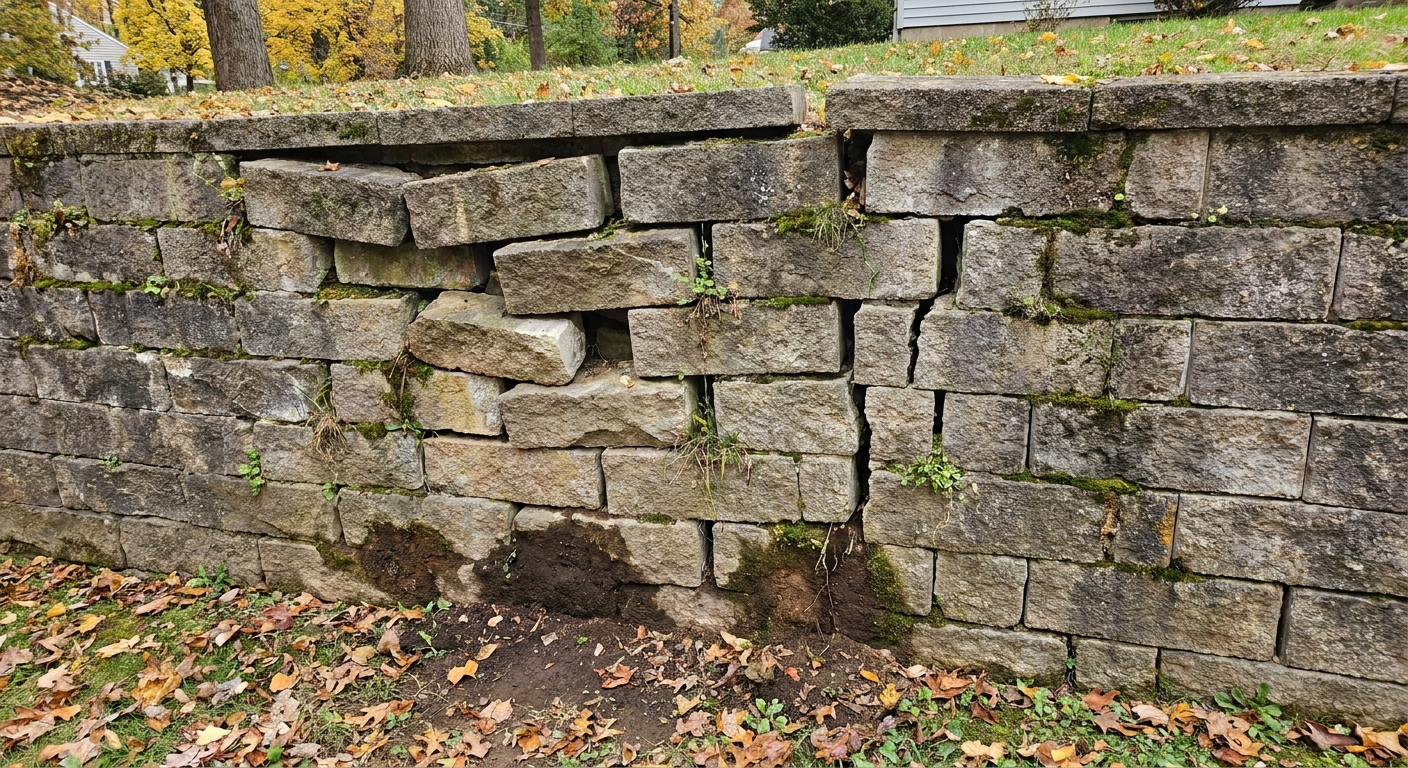
Efflorescence—the white, chalky buildup that shows up on stone surfaces—is a sign that water's moving through the wall and carrying salts with it. It's not always a structural emergency, but it's a symptom of a moisture problem. If water's migrating through your wall, it's also likely causing freeze-thaw damage, weakening mortar, and contributing to other issues you can't see yet.
Stains from rust, mold, or mildew tell a similar story. They point to water where it shouldn't be. Cleaning the surface won't solve the problem—you need to address the source. That means checking drainage, inspecting joints, and figuring out where the moisture's coming from before it does more damage.
Why Waiting Costs More Than Acting
Retaining wall repairs don't get cheaper with time. A crack you could've patched for a few hundred dollars turns into a section rebuild. A drainage issue you ignored becomes a foundation failure. The wall that needed attention two years ago now needs to be torn out and started over.
We've seen it happen over and over—property owners who waited because the problem didn't seem urgent, then faced bills five times higher when the wall finally gave out. The work you do now, while the damage is still manageable, saves you from the work you'll be forced to do later when it's not. Here's what early intervention typically addresses:
- Repointing mortar joints before they crumble completely
- Resetting displaced stones before the entire section shifts
- Installing or repairing drainage systems while the wall's still standing
- Reinforcing footings before erosion undermines them
- Removing invasive plants before roots cause irreversible damage
When DIY Doesn't Cut It
Some maintenance you can handle yourself. Pulling weeds, clearing debris, checking for obvious damage—that's all fair game. But when it comes to structural issues, drainage failures, or anything involving the wall's foundation, this isn't the time to wing it. Retaining walls carry serious loads, and mistakes don't just waste money—they can cause collapses, property damage, and safety hazards.
A professional assessment tells you what you're actually dealing with. Not every problem requires a full rebuild, but some do, and the only way to know is to bring in someone who's seen hundreds of walls in every stage of failure. They'll spot the issues you missed and give you a plan that's based on engineering, not guesswork. Key areas where professionals add real value include:
- Identifying hidden structural damage that's not visible from the surface
- Designing drainage solutions that actually solve the problem long-term
- Assessing whether repairs will hold or if replacement is the smarter move
- Understanding local soil conditions and how they affect wall stability
- Pulling permits and ensuring work meets code requirements
Keeping Your Wall Standing for the Long Haul
Retaining walls don't ask for much, but they do need regular attention. Annual inspections, seasonal drainage checks, and prompt repairs when something's off—that's the routine that keeps a wall functional for decades instead of watching it fail in five years. Warwick properties deal with weather that's hard on stone, and the walls that survive are the ones that get the care they need when they need it.
Catch the signs early, act while the fix is still straightforward, and you'll avoid the nightmare of a total rebuild. Your wall's already doing the heavy lifting—literally. The least you can do is make sure it has what it takes to keep doing it. If you're seeing any of these warning signs, don't wait for the wall to make the decision for you. Regular maintenance tasks to keep on your radar:
- Inspecting for cracks, bulges, and loose stones after major storms
- Clearing weep holes and drainage channels before wet seasons
- Trimming back vegetation and removing invasive plants annually
- Monitoring for soil erosion and addressing it before it reaches the foundation
- Scheduling professional evaluations every few years to catch what you might miss
Stone Walls Don't Fix Themselves
Your retaining wall is doing more than holding back dirt—it's protecting your property, supporting your landscaping, and keeping your yard functional. When it starts showing signs of trouble, those signs are your early warning system. Ignore them, and you're gambling with a structure that's already under stress. Pay attention, and you can extend the life of your wall by years, sometimes decades.
The walls that last are the ones that get respect. Not just during construction, but every year after. Warwick properties deserve residential masonry services that can handle the load, the weather, and the test of time. If yours is showing any of these signs, it's time to take action—before the wall takes action for you.
Let’s Protect Your Warwick Stone Wall Together
We know how much your property depends on a strong, reliable retaining wall. If you’ve spotted any of these warning signs, let’s get ahead of the problem before it turns into a bigger headache. Give us a call at 215-355-7549 to talk with our team, or schedule an appointment and let’s make sure your wall stands strong for years to come.
‹ Back
Recent Posts
-
Signs Your Stone Retaining Wall in Warwick Needs Some Attention
October 23, 2026
-
Are Your Brick Steps in Holland Starting to Come Loose?
October 9, 2026
-
Why Concrete Walkways in Warrington Begin to Crack and Settle
September 25, 2026
-

Keeping Your Stucco Looking Its Best in Doylestown
September 11, 2026
-
When Chimney Cracks in Newtown Need More Than a Quick Repair
August 28, 2026