When Chimney Cracks in Newtown Need More Than a Quick Repair
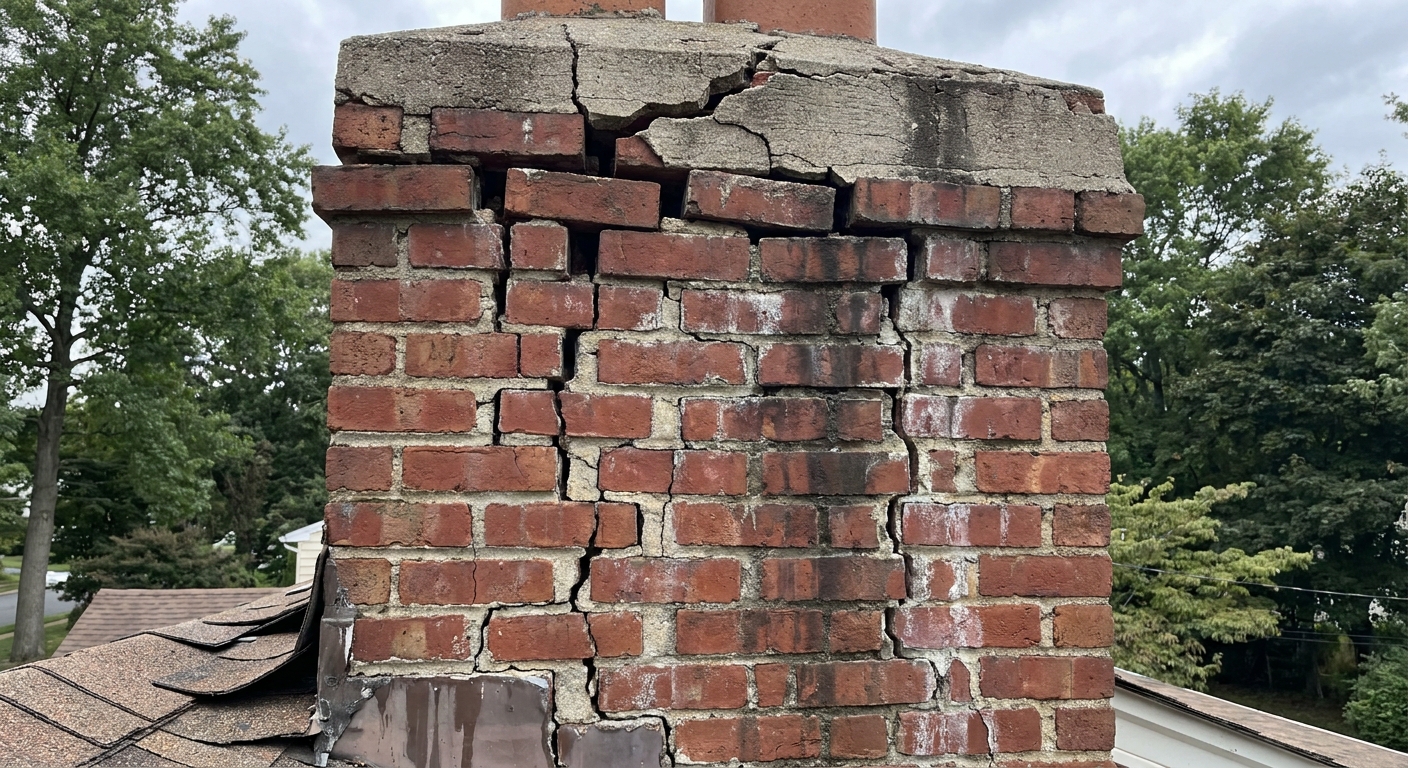
Most homeowners see a crack in their chimney and think patch job. Slap some mortar in there, move on with life. But masonry doesn't work that way—and Newtown's freeze-thaw cycle doesn't care what you assumed was fine. Some cracks are symptoms. Others are warnings. And the worst ones? They're structural red flags that won't get better just because you covered them up.
So before you grab a trowel or call the first guy with a truck, understand this. Not all cracks mean the same thing. Some need attention now. Others needed it six months ago. And if you're guessing which is which, you're already behind.
The Difference Between Surface Wear and Structural Failure
Hairline cracks in the mortar joints? That's normal aging. Exposure does that. Rain, wind, temperature swings—it all adds up. Tuckpointing handles most of it. A skilled mason clears out the bad mortar, packs in fresh material, and you're back in business. It's routine maintenance, not crisis mode.
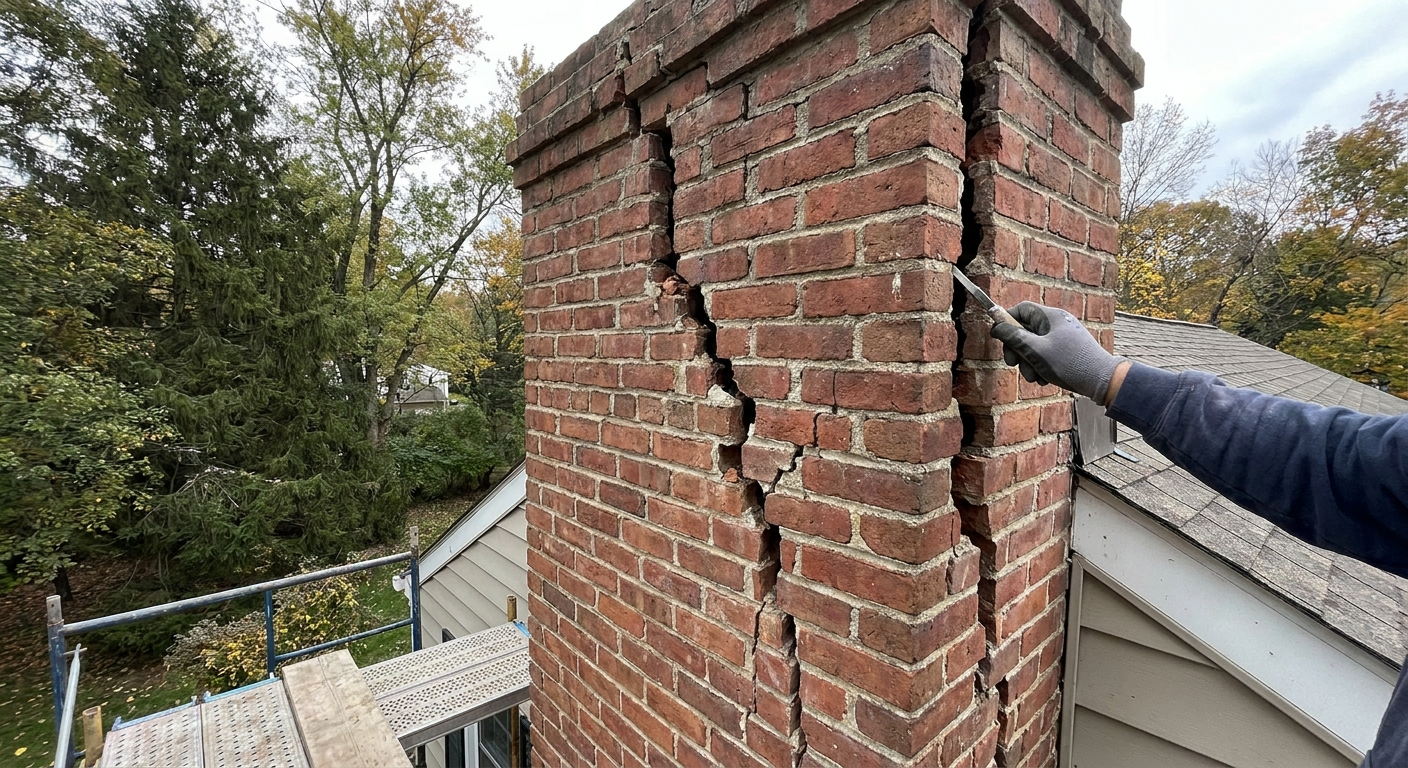
But when the brick itself starts splitting, or when gaps appear around the crown or flue, that's different. Those areas aren't decorative. They're load-bearing, weather-sealing, gas-containing. Damage there doesn't stay contained. It spreads. And it gets worse fast, especially when water finds a way in.
What We Look For When the Damage Goes Deeper
There are telltale signs that separate quick fixes from full-blown problems. If any of these show up during an inspection, we're not talking about cosmetic work anymore.
- Cracks wider than an eighth of an inch that keep expanding
- Damage to the chimney crown or along the flue liner
- Visible lean or tilt away from the roofline
- White powder or water stains on the exterior bricks
- Bricks that are loose, chipped, or falling out entirely
Why Patching Over Problems Backfires
Covering up a crack without fixing what caused it is like putting a band-aid on a broken bone. Water still gets in. Freeze-thaw cycles still happen. The chimney still shifts. And now you've just added another layer that'll fail when the real issue resurfaces.
Water infiltration is the silent killer here. Once it breaches the outer shell, it rots the interior structure, corrodes metal components, and creates conditions for mold. In extreme cases, it destabilizes the entire stack. And if the flue cracks? Carbon monoxide doesn't need much of an opening to become a problem inside your home.
Seasonal Swings Make Everything Worse
Newtown's weather doesn't do chimneys any favors. Water seeps into a crack during a rainstorm, freezes overnight, expands, and pushes the masonry apart. By spring, what started as a minor fissure is now a structural concern. Every cycle makes it worse.
That's why timing matters. Catching damage early—before winter hits—gives you options. Waiting until the crack is obvious from the street? That's when repair costs jump and safety risks multiply.
When to Call Someone Who Knows What They're Looking At
DIY has its place. Chimney diagnostics isn't one of them. A certified inspector knows how to read the damage, trace it back to the cause, and recommend solutions that actually hold up. Sometimes that's a liner replacement. Sometimes it's a partial rebuild. Sometimes it's foundation work that has nothing to do with the chimney but everything to do with why it's cracking.
Annual inspections catch most of this before it becomes urgent. We look at the crown, the flashing, the mortar, the flue. We check for water intrusion, settlement, and wear patterns. And we tell you what needs fixing now versus what you can monitor.
What Real Repairs Actually Involve
When a chimney crack goes beyond surface-level fixes, the scope changes. We're not just filling gaps—we're rebuilding sections, sealing vulnerabilities, and addressing the root cause so it doesn't happen again.
- Replacing damaged bricks or entire courses if the masonry has failed
- Rebuilding the crown with proper slope and overhang to shed water
- Installing or repairing the flue liner to contain heat and gases safely
- Correcting foundation issues that caused the chimney to shift or settle
- Applying waterproof sealants designed for masonry, not generic caulk
The Risks of Waiting Too Long
Delaying repairs doesn't save money. It multiplies costs. A $500 tuckpointing job turns into a $5,000 rebuild when water gets inside and rots the structure. A cracked flue that could've been lined becomes a carbon monoxide hazard that forces you off-site until it's fixed.
And then there's the safety angle. A chimney that's visibly leaning or losing bricks isn't just unsightly—it's a liability. If it collapses during a storm or under its own weight, you're looking at damage to your roof, your home, and potentially someone standing too close.
How to Avoid the Worst of It
Prevention beats reaction every time. Regular maintenance, prompt repairs, and smart usage keep most chimneys functional for decades. Ignoring the small stuff guarantees the big stuff will find you eventually.
- Schedule yearly inspections before the heating season starts
- Address mortar cracks as soon as they appear, not after they widen
- Install a chimney cap to keep water and debris out of the flue
- Monitor the crown for cracks and reseal it when necessary
- Don't burn wet wood or trash that creates excessive creosote buildup
What Happens During a Thorough Inspection
A real chimney inspection isn't a glance from the roof. It's a systematic review of every component, inside and out. We use cameras to check the flue liner, moisture meters to detect hidden water damage, and our eyes to spot the stuff that equipment can't catch.
You'll get a written report that breaks down what's good, what's marginal, and what's urgent. No guessing. No upselling. Just the facts and a plan that makes sense for your home and your timeline.
Why Certified Pros Matter More Than You Think
Anyone can claim they fix chimneys. Not everyone has the training, insurance, or track record to back it up. Certified chimney professionals follow industry standards, understand building codes, and know how to diagnose problems that amateurs miss entirely.
- They're trained to spot structural issues, not just cosmetic ones
- They carry liability insurance in case something goes wrong
- They use materials and methods that meet safety codes
- They document their work so you have records for future inspections or resale
- They know when a repair is enough and when a rebuild is necessary
The Real Cost of Guessing Wrong
Hiring the wrong person or ignoring the problem altogether costs more than money. It costs peace of mind. It costs safety. And in some cases, it costs you the ability to use your fireplace at all until the damage is fixed. A compromised chimney isn't something you live with—it's something you deal with before it deals with you.
Chimneys don't heal themselves. Cracks don't shrink. And hoping for the best has never been a strategy that works when masonry and fire are involved. If something looks wrong, it probably is. And if you're not sure, that's exactly when you call someone who is. Our team provides comprehensive chimney repair services and specializes in chimney repair in Newtown, addressing everything from chimney damage causes and prevention in Newtown to complete structural restoration. We also handle stone and brickwork for all types of residential masonry services, ensuring your entire structure remains safe and sound.
Let’s Protect Your Home—Starting with Your Chimney
We know how important it is to keep your chimney safe, sound, and ready for every season in Newtown. If you’ve noticed cracks or signs of trouble, don’t wait for small issues to become big headaches. Let’s get your chimney back in top shape—call us at 215-355-7549 or schedule an appointment and we’ll make sure your home stays protected year-round.
‹ Back
Recent Posts
-
Are Your Brick Steps in Holland Starting to Come Loose?
October 9, 2026
-
Why Concrete Walkways in Warrington Begin to Crack and Settle
September 25, 2026
-

Keeping Your Stucco Looking Its Best in Doylestown
September 11, 2026
-
When Chimney Cracks in Newtown Need More Than a Quick Repair
August 28, 2026
-
Why Brick Pointing Matters for Older Homes in Doylestown
December 26, 2025